
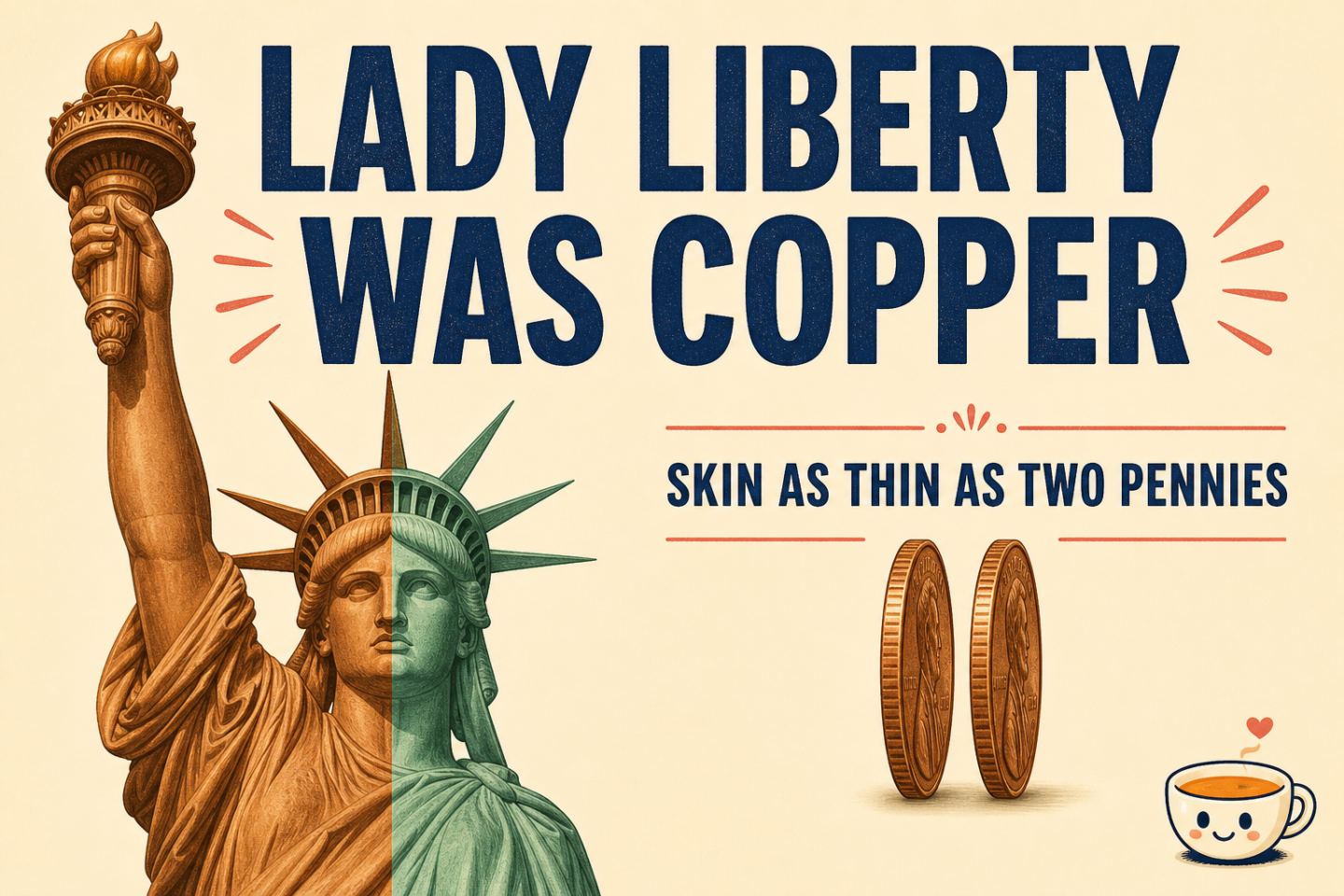
The Statue of Liberty did not begin life in the familiar green we see today. When the monument was unveiled in 1886, its exterior was the warm brown color of new copper—closer to a shiny penny than to sea-green stone.
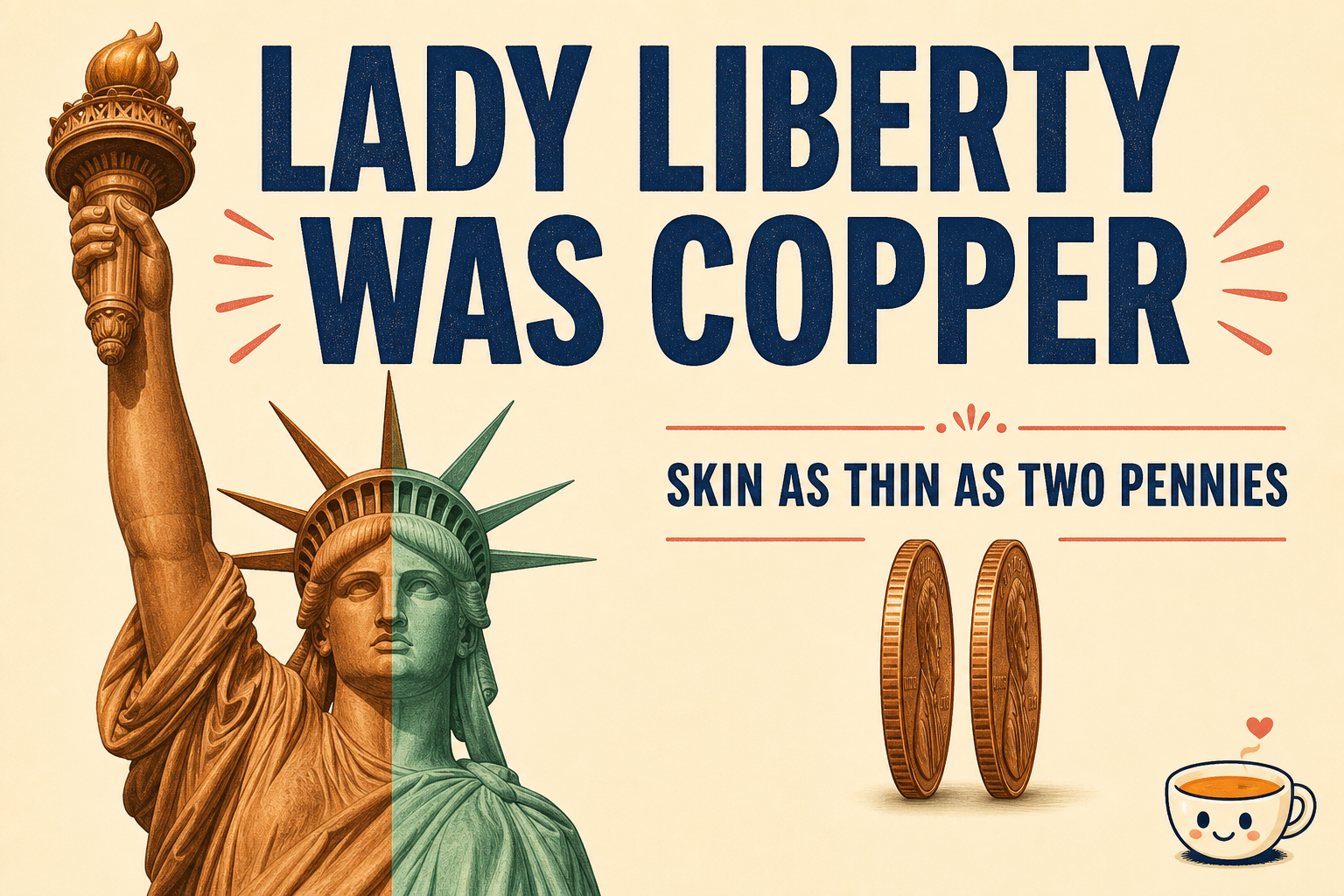
Lady Liberty is covered in copper
The monument’s outer surface is made from sheets of copper supported by an internal framework. According to the U.S. National Park Service, the copper skin is only 3/32 of an inch thick—about 2.4 millimeters, or roughly the thickness of two U.S. pennies placed together.
That sounds surprisingly delicate for a monument that rises 305 feet from the ground to the tip of its torch. The thin metal skin works because it is shaped and supported rather than serving as a solid load-bearing wall.
Why did the copper turn green?
Copper changes when it is exposed to the atmosphere. Over time, reactions involving air and moisture created a layer of corrosion products on the statue’s surface. That layer is called a patina.
The transformation was gradual. National Park Service history records describe the statue as copper-brown when it was completed in 1886. By 1906, it had developed the sea-green appearance that is now recognized around the world.
This means the green color is not paint. It is the result of the copper surface naturally changing during years of exposure in New York Harbor.
The patina helps protect the statue
The green coating is more than a color change. The National Park Service explains that the patina protects the copper beneath it from further natural weathering. In many places, the protective layer is about as thick as the original copper behind it.
That is one reason removing the green surface to make the statue look “new” again would be a bad idea. The patina has become both part of the monument’s identity and part of its defense against the environment.
How thin is “two pennies”?
The penny comparison is a simple way to picture the copper’s thickness, but it does not mean the statue is made from stacked coins. The official measurement is 3/32 of an inch. Two pennies placed together are a familiar visual approximation of that dimension.
The monument contains a great deal of copper overall because its surface area is enormous. Yet at any single point, the skin itself remains remarkably thin.
From material to symbol
The Statue of Liberty’s changing color is a useful reminder that famous landmarks are not frozen in time. Materials react with their environments, and those changes can become part of how later generations understand a place.
Lady Liberty’s green surface was not the sculptor’s original color. But after more than a century, the patina is now inseparable from the monument’s public image—and it continues to help preserve the copper underneath.
Sources
- U.S. National Park Service — Statue Statistics
- U.S. National Park Service — Statue of Liberty Facts
- U.S. National Park Service — Liberty Island Cultural Landscape
Illustration created for Knowledge Soup. It is a symbolic comparison, not a technical cutaway or scale diagram.